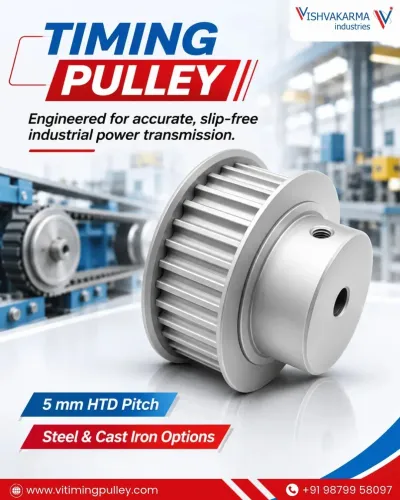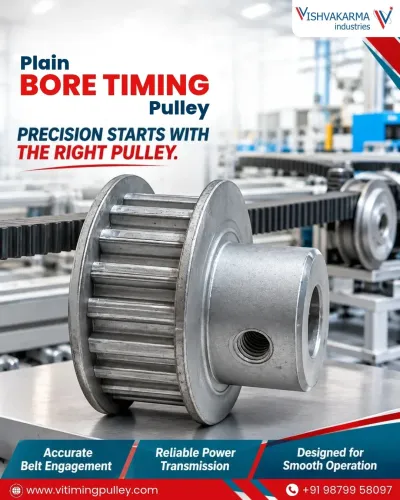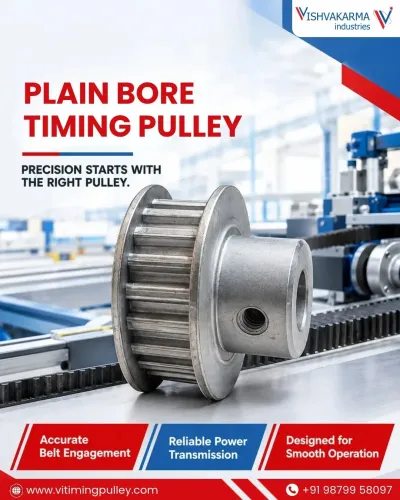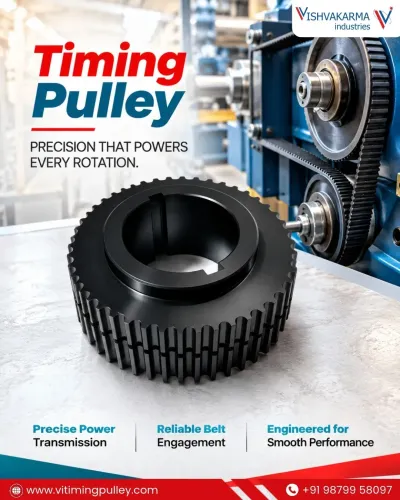
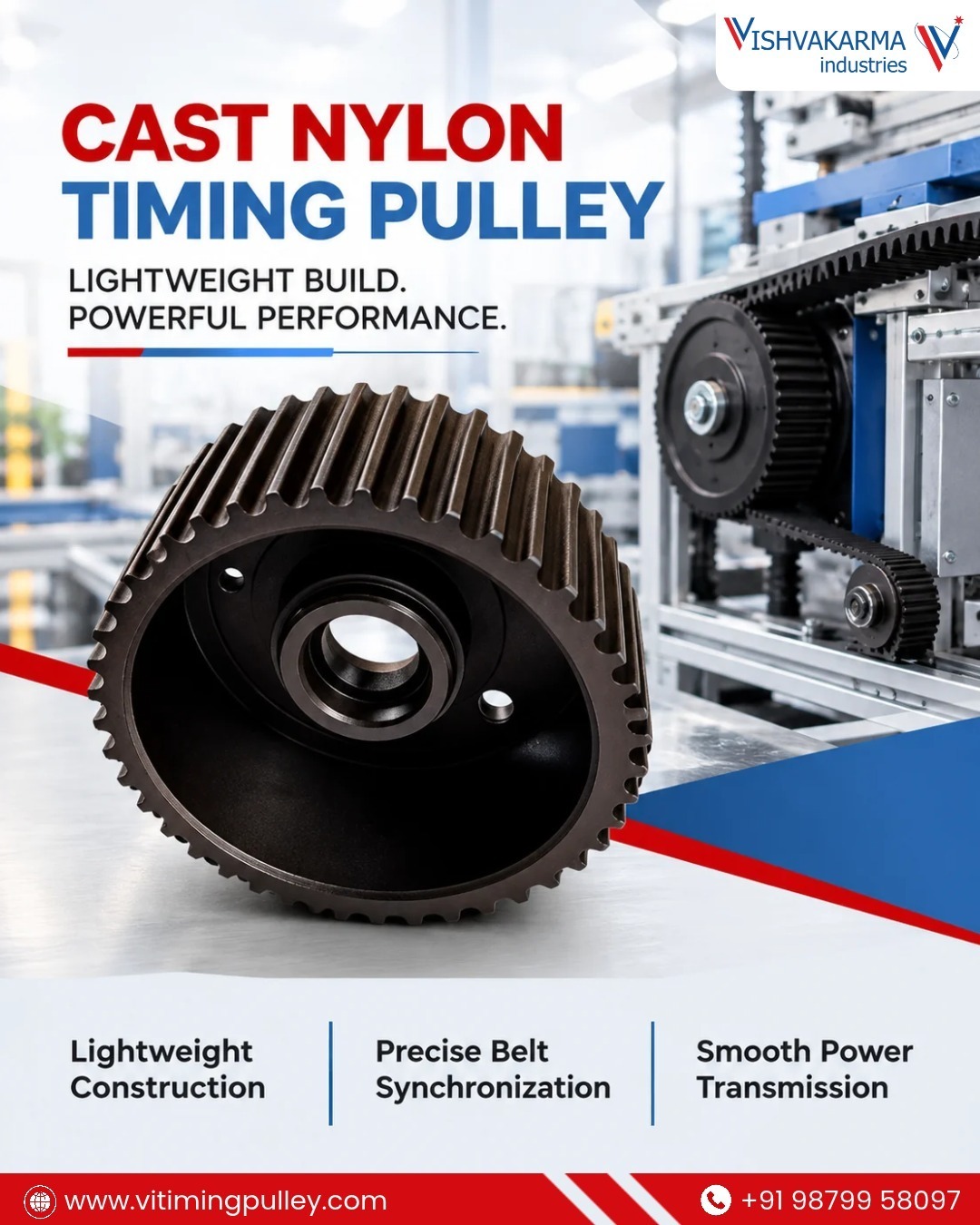
Efficient motion control is essential for maintaining consistent performance in modern industrial machinery. A cast nylon timing pulley transfers rotational motion between shafts while keeping a compatible timing belt engaged with the pulley teeth. Its lightweight construction, useful mechanical properties, and potential noise-reduction benefits make it suitable for applications where synchronized movement matters.
Vishvakarma Industries serves as a resource for businesses seeking timing pulley solutions for industrial applications. When selecting a Cast Nylon Timing Pulley Manufacturer in Ahmedabad, consider pulley dimensions, belt compatibility, load capacity, operating speed, and working temperature to ensure reliable performance.
What Is a Cast Nylon Timing Pulley?
A Cast Nylon Timing Pulley is a toothed mechanical component manufactured from cast nylon, an engineering plastic used in various industrial applications. The pulley teeth engage the matching grooves of a timing belt, transferring motion between connected shafts without the slipping associated with some friction-based belt drives.
These pulleys are useful in machinery that requires coordinated movement and reduced rotating weight. Their suitability depends on the material grade, tooth profile, pulley dimensions, operating conditions, and applied load.
Businesses looking for a Cast Nylon Timing Pulley Supplier in Gujarat should confirm that the pulley matches their machine specifications and intended operating environment.
How Does a Cast Nylon Timing Pulley Improve Power Transmission?
1. Maintains Accurate Belt Synchronization
The teeth of a Cast Nylon Timing Pulley engage with the grooves of a compatible timing belt to maintain coordinated movement between the driving and driven shafts. This helps support repeatable positioning in machinery that depends on synchronized operation.
Correct tooth geometry, proper alignment, and appropriate belt tension help prevent tooth skipping and unnecessary wear.
2. Reduces Rotating Component Weight
Cast nylon is lighter than many commonly used metal materials. A lightweight pulley can reduce a drive system's rotating mass, helping machinery accelerate and decelerate more easily.
This advantage can be valuable in select automation systems, packaging equipment, and other applications that frequently change operating speed.
3. Helps Minimize Operating Noise
A nylon pulley may generate less noise than a comparable metal component in certain drive systems. Its material properties can reduce vibration during belt engagement, depending on the overall machine design.
Actual noise levels depend on belt tension, alignment, rotational speed, loading conditions, and installation quality.
4. Supports Smooth and Consistent Motion
A properly selected Timing Belt Pulley helps maintain reliable engagement between the belt and pulley. This supports consistent motion transfer and reduces the risk of interruptions caused by incorrect sizing or unsuitable installation.
Choosing the correct tooth profile and maintaining proper belt tension are essential for achieving reliable performance.
5. Offers Useful Material Properties
Cast nylon can provide useful wear and friction characteristics in suitable operating conditions. It also generally offers better corrosion resistance than many unprotected metals.
However, temperature, moisture absorption, chemical exposure, and mechanical loading can affect nylon's dimensions and performance. Therefore, selecting the appropriate material grade is important.
Common Applications of Cast Nylon Timing Pulleys
Cast Nylon Timing Pulleys can be used in various types of machinery where their mechanical properties meet application requirements.
* Packaging machinery: Helps synchronize belt movement and connected components.
* Automation equipment: Supports coordinated motion in suitable drive systems.
* Textile machinery: Helps maintain consistent movement between mechanical components.
* Printing equipment: Supports controlled motion in compatible assemblies.
* Conveyor systems: Transfer rotational motion in applications suited to nylon pulleys.
* Light industrial machinery: Provides a lightweight option for selected power transmission requirements.
The final choice should account for operating speed, load, temperature, belt type, and the equipment's operating environment.
Both materials can perform reliably when appropriately selected. The correct option depends on the machine's load, temperature, operating speed, and service requirements.
Factors to Consider When Choosing a Cast Nylon Timing Pulley
Before purchasing a Cast Nylon Timing Pulley, evaluate these important factors:
* Belt compatibility: Match the pulley tooth profile and pitch to the timing belt.
* Dimensions: Check the outer diameter, pulley width, bore size, and mounting arrangement.
* Load capacity: Ensure the pulley can withstand the expected torque and mechanical forces.
* Operating speed: Consider continuous speed, acceleration, and deceleration.
* Temperature range: Choose a nylon grade suitable for the operating environment.
* Environmental exposure: Assess moisture, chemicals, dust, and other potential influences.
* Installation requirements: Confirm shaft alignment, mounting accuracy, and appropriate belt tension.
* Maintenance: Establish regular inspections for cracks, tooth wear, deformation, and belt damage.
Evaluating these details helps businesses choose a pulley that meets their operational requirements and supports consistent machine performance.
Why Choose Vishvakarma Industries?
When searching for a Cast Nylon Timing Pulley Manufacturer in Ahmedabad, businesses should look for a supplier that can address their technical requirements and provide clear product specifications.
Vishvakarma Industries is a strong option for buyers exploring cast nylon timing pulley solutions. Before placing an order, customers should discuss the required dimensions, tooth profile, material grade, load conditions, and intended application to confirm product suitability.
Businesses looking for a Cast Nylon Timing Pulley Supplier in Gujarat or a Cast Nylon Timing Pulley Distributor in India should also evaluate product quality, specification accuracy, availability, and technical support before making a purchasing decision.
A Cast Nylon Timing Pulley can support efficient power transmission through accurate belt synchronization, lightweight construction, and smooth mechanical operation in suitable applications. Its material properties can also offer practical benefits where reduced weight and lower operating noise are priorities.
Selecting the right pulley requires careful consideration of belt compatibility, load capacity, operating speed, temperature, and installation requirements. Contact Vishvakarma Industries to discuss your timing pulley requirements and help us identify the specifications your application needs.
Frequently Asked Questions (FAQs)
1. What is a Cast Nylon Timing Pulley used for?
A Cast Nylon Timing Pulley transfers rotational motion through a compatible toothed timing belt. It is used in suitable packaging, automation, textile, printing, and other industrial machinery.
2. What are the main benefits of a Cast Nylon Timing Pulley?
Potential benefits include lightweight construction, reduced noise, corrosion resistance, and good wear properties under appropriate operating conditions.
3. Is a Cast Nylon Timing Pulley suitable for heavy-duty applications?
Suitability depends on the nylon grade, pulley design, operating temperature, speed, and applied torque. High-load or high-temperature applications may require a different material or a specially engineered design.
Keywords