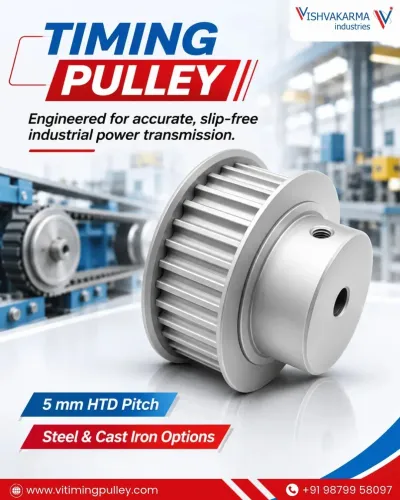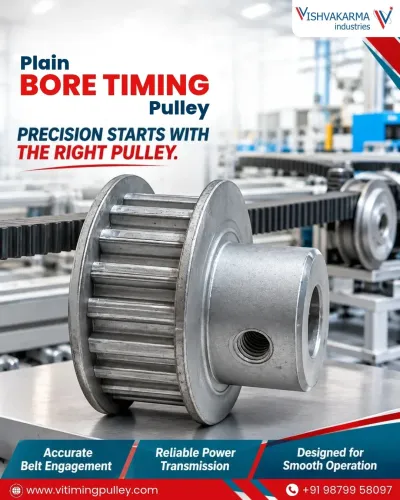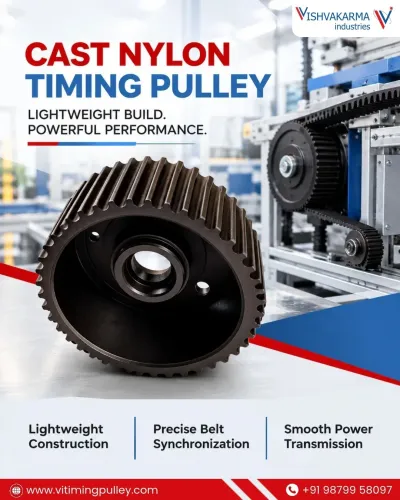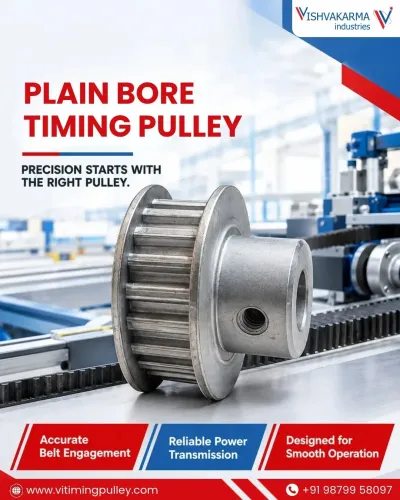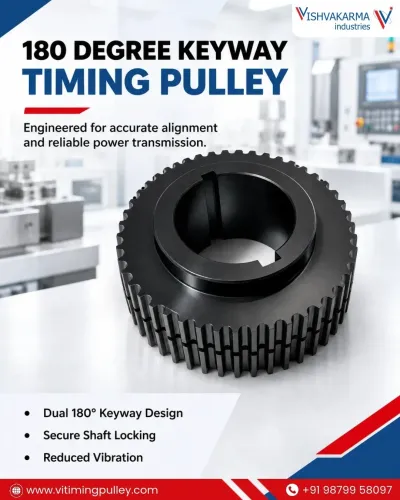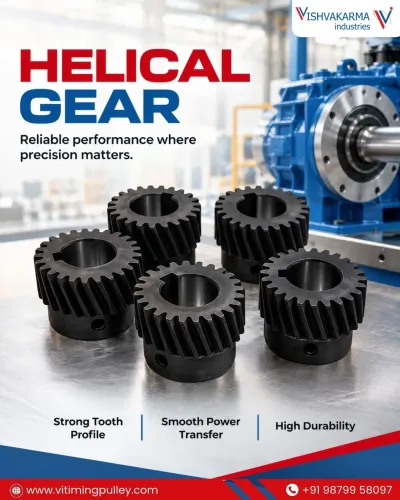
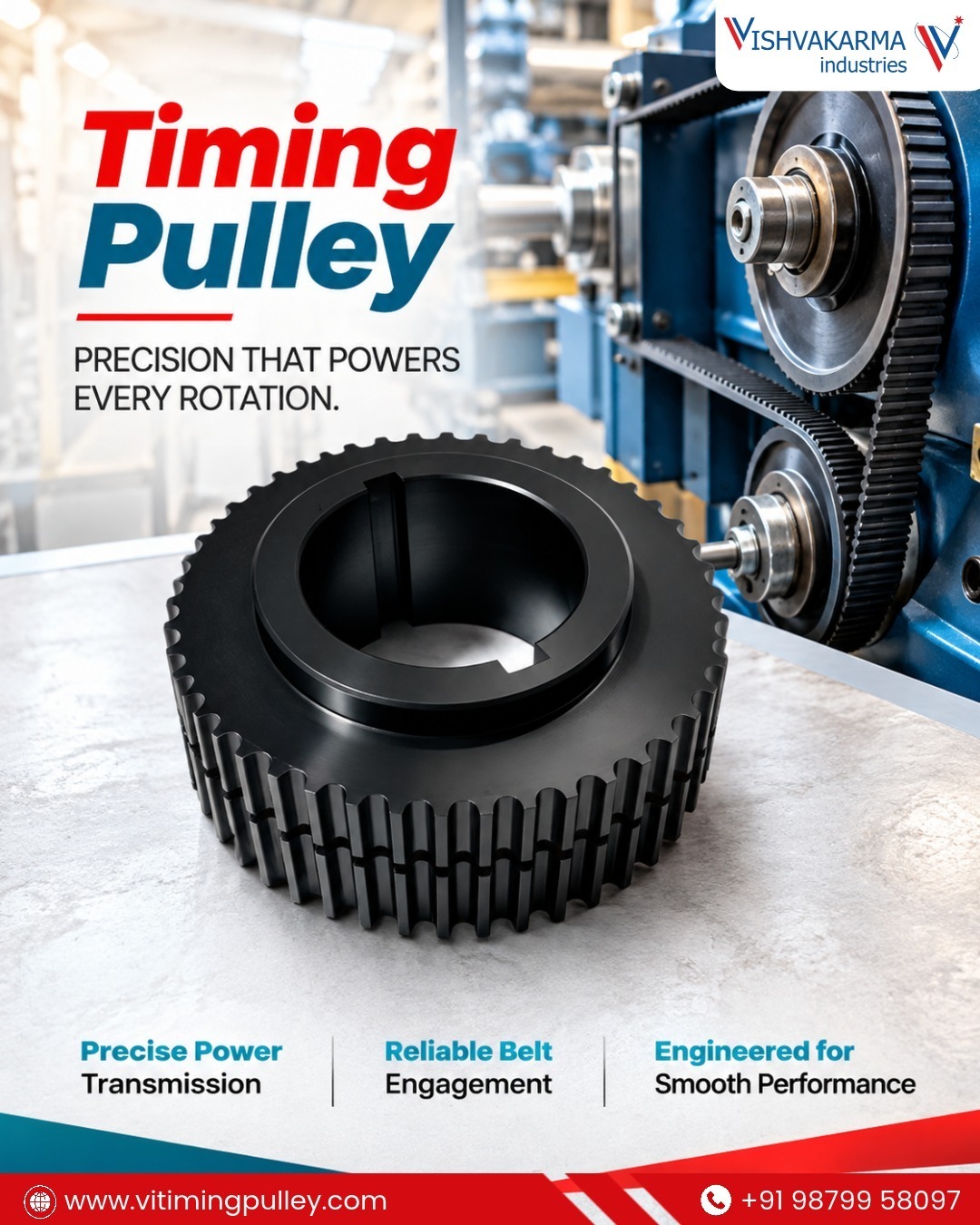
Industrial machinery depends on precise motion, synchronized components, and reliable power transmission to keep production running smoothly. A well-designed drive system helps equipment operate consistently while reducing unnecessary wear and maintenance issues. A Timing Pulley is an important component in such systems because it works with a compatible toothed timing belt to transfer rotational motion with controlled synchronization.
Vishvakarma Industries provides timing pulley solutions for industrial power transmission applications. Whether you are selecting components for automation equipment, packaging machinery, or manufacturing systems, understanding a timing pulley's working principles and selection criteria can help you make an informed decision.
What Is a Timing Pulley
A Timing Pulley is a mechanical component with teeth designed to engage with a matching toothed timing belt. This positive-engagement mechanism helps maintain a predictable relationship between the driving and driven shafts.
Unlike conventional friction-based belt drives, timing belt systems use matching teeth to transmit motion, making them suitable for applications that require synchronized movement and repeatable positioning.
Timing pulleys come in different sizes, tooth profiles, materials, and mounting configurations to meet different machinery requirements.
How Does a Timing Pulley Ensure Precise Power Transmission
1. Maintains Synchronized Movement
The teeth of a timing pulley fit into the corresponding teeth of a compatible belt. This engagement reduces relative slip in friction-driven belt systems under suitable operating conditions.
As a result, connected shafts can maintain a consistent rotational relationship, which is important for machinery that depends on coordinated movement.
2. Improves Motion Accuracy
A properly selected Precision Timing Pulley supports controlled belt movement and repeatable positioning. This is particularly valuable in automated production lines, packaging systems, and machinery that requires consistent operating sequences.
Actual positioning accuracy also depends on belt tension, alignment, manufacturing tolerances, backlash, and the overall drive design.
3. Supports Efficient Power Transmission
Timing pulleys transfer mechanical power by engaging pulley and belt teeth. Selecting the right pulley diameter, tooth profile, belt width, and material helps the drive system operate for its intended load and speed.
Correctly matched components can provide dependable transmission without relying solely on friction.
4. Promotes Smooth Machine Operation
Properly installed timing pulleys can support consistent movement and help limit unnecessary vibration caused by alignment or installation problems. Regularly inspect the pulley teeth, belt tension, and shaft alignment to catch potential issues before they affect production.
5. Helps Maintain Consistent Production
Industrial processes often require machinery to repeat the same movements throughout a production cycle. Timing pulleys help coordinate rotating components, supporting predictable motion in suitable mechanical and automated systems.
Choosing components that match the required torque, speed, and operating conditions is essential to maintain consistency.
What Are the Main Benefits of an Industrial Timing Pulley
An Industrial Timing Pulley offers several advantages when selected and maintained correctly.
* Accurate synchronization: Helps maintain the intended relationship between connected rotating components.
* Reduced belt slippage: Uses positive tooth engagement rather than relying only on friction.
* Repeatable movement: Supports consistent motion in automation and manufacturing applications.
* Flexible design options: Available in different sizes, tooth profiles, materials, and mounting arrangements.
* Dependable performance: Properly matched components can support stable operation under the right conditions.
* Manageable maintenance: Routine inspections help identify belt wear, tooth damage, and alignment issues.
Where Are Timing Pulleys Commonly Used
Timing belt pulleys are used in various industries that require controlled movement and reliable mechanical transmission.
Industrial Automation
Timing pulleys help coordinate moving parts in automated machinery and compatible motion-control systems.
Packaging Machinery
Packaging equipment uses timing belt drives to synchronize feeding mechanisms, material movement, and other machine operations.
CNC Machines
Suitable timing pulley systems transmit motion in selected CNC mechanisms. The required precision and load capacity determine the appropriate configuration.
Printing Equipment
Timing pulleys support coordinated movement in printing machinery and material-feeding systems.
Textile Machinery
Textile production equipment may use timing pulleys to coordinate rotating components and maintain consistent operation.
Manufacturing and Assembly Lines
Timing belt drives are used in compatible conveyors, assembly equipment, and production systems that require predictable movement.
How to Choose the Right Timing Pulley for Your Application
Selecting the right timing pulley helps you achieve the required performance, compatibility, and service life. Consider these important factors before purchasing.
Tooth Profile and Pitch
The pulley tooth profile and pitch must match the timing belt. Incompatible components can lead to poor engagement, premature wear, or drive failure.
Diameter and Number of Teeth
Pulley diameter and tooth count influence the transmission ratio and rotational relationship between the connected shafts. Select dimensions according to the machine's design and operating requirements.
Material and Construction
Timing pulleys may be manufactured from aluminum, steel, or other suitable engineering materials. Material selection depends on load, operating environment, weight requirements, corrosion exposure, and durability.
Belt Width and Load Capacity
The pulley must match the belt width and support the required torque and operating load. Also consider speed, acceleration, and duty cycle.
Bore Size and Mounting Arrangement
Check the shaft diameter, bore dimensions, keyway requirements, and mounting method to ensure secure installation and proper alignment.
Maintenance and Operating Conditions
Inspect belt tension, tooth condition, and shaft alignment according to the equipment manufacturer's recommendations. Proper maintenance helps reduce premature wear and unexpected downtime.
Why Choose Vishvakarma Industries for Timing Pulley Solutions
Vishvakarma Industries offers timing pulley solutions for industrial power transmission requirements. Businesses comparing a Timing Pulley Manufacturer in Ahmedabad, a Timing Pulley Supplier in Gujarat, or a Timing Pulley Distributor in India should evaluate product compatibility, dimensions, tooth profiles, material options, and manufacturing tolerances.
Before placing an order, prepare the following details:
* Required pulley diameter and tooth count
* Timing belt profile and pitch
* Bore size and keyway requirements
* Preferred material and mounting arrangement
* Operating speed, torque, and load conditions
Sharing these specifications helps us determine a suitable pulley configuration for your machinery.
A Timing Pulley helps industrial machines maintain synchronized movement and dependable power transmission by engaging a compatible toothed timing belt. It supports repeatable motion, controlled positioning, and consistent performance across suitable manufacturing and automation applications.
Choosing the right pulley requires careful consideration of tooth profile, dimensions, material, load capacity, and belt compatibility. With proper selection and routine maintenance, a timing pulley system can support efficient, reliable machine operation.
If you need a suitable industrial timing pulley, contact Vishvakarma Industries to discuss your application requirements and explore available options.
Frequently Asked Questions (FAQs)
1. What is a timing pulley used for?
A timing pulley transfers rotational motion by engaging a compatible toothed timing belt. It is commonly used in machinery requiring synchronized movement and predictable power transmission.
2. How does a timing pulley reduce belt slippage?
Its teeth engage with matching belt teeth, reducing reliance on friction to transmit motion. Correct belt compatibility, alignment, and tension are still essential for dependable operation.
3. What is the difference between a timing pulley and a standard pulley?
A timing pulley uses teeth to engage with a toothed belt, while many conventional belt pulleys rely primarily on friction. Each type is designed for different power transmission requirements.
Keywords