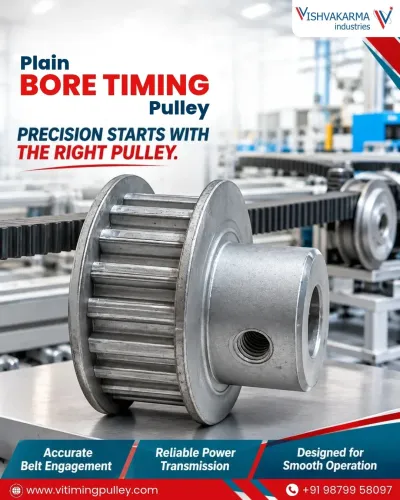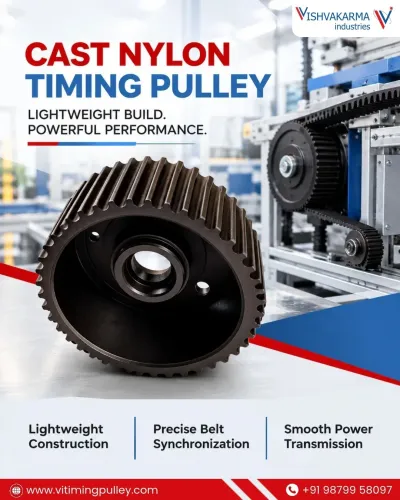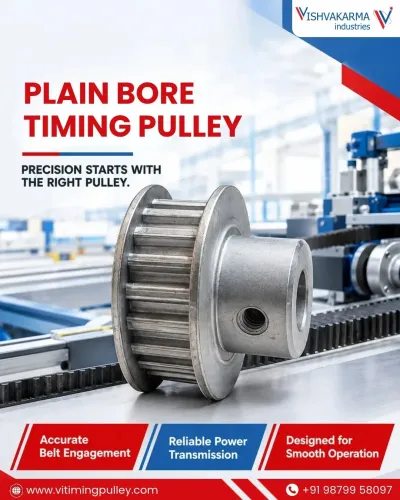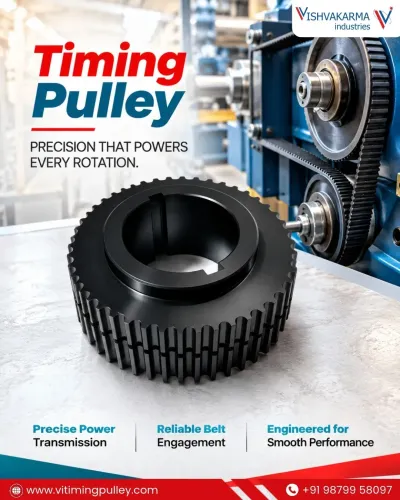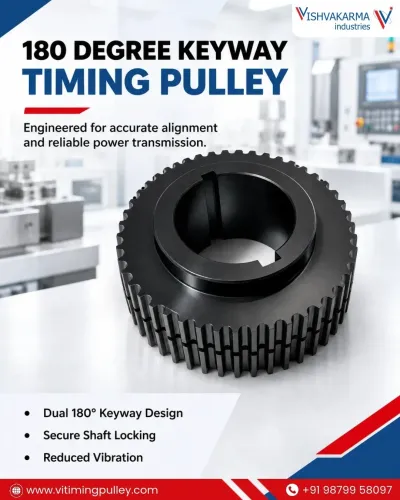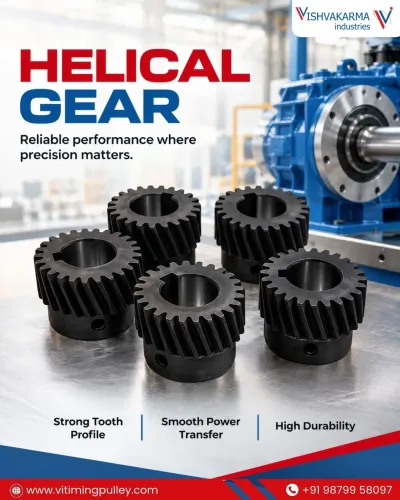
Efficient power transmission is essential for the smooth operation of industrial machinery, automation systems, and manufacturing equipment. Maintaining accurate movement, proper synchronization, and consistent machine performance is important for achieving reliable industrial operations. A Timing Pulley plays an important role in this process by working with a compatible toothed timing belt to transfer mechanical power with minimal slippage.
Unlike conventional belt drives that primarily depend on friction, timing pulleys use specially designed teeth that engage with the grooves of a timing belt. This positive engagement helps maintain accurate rotational movement and synchronized operation between connected components.
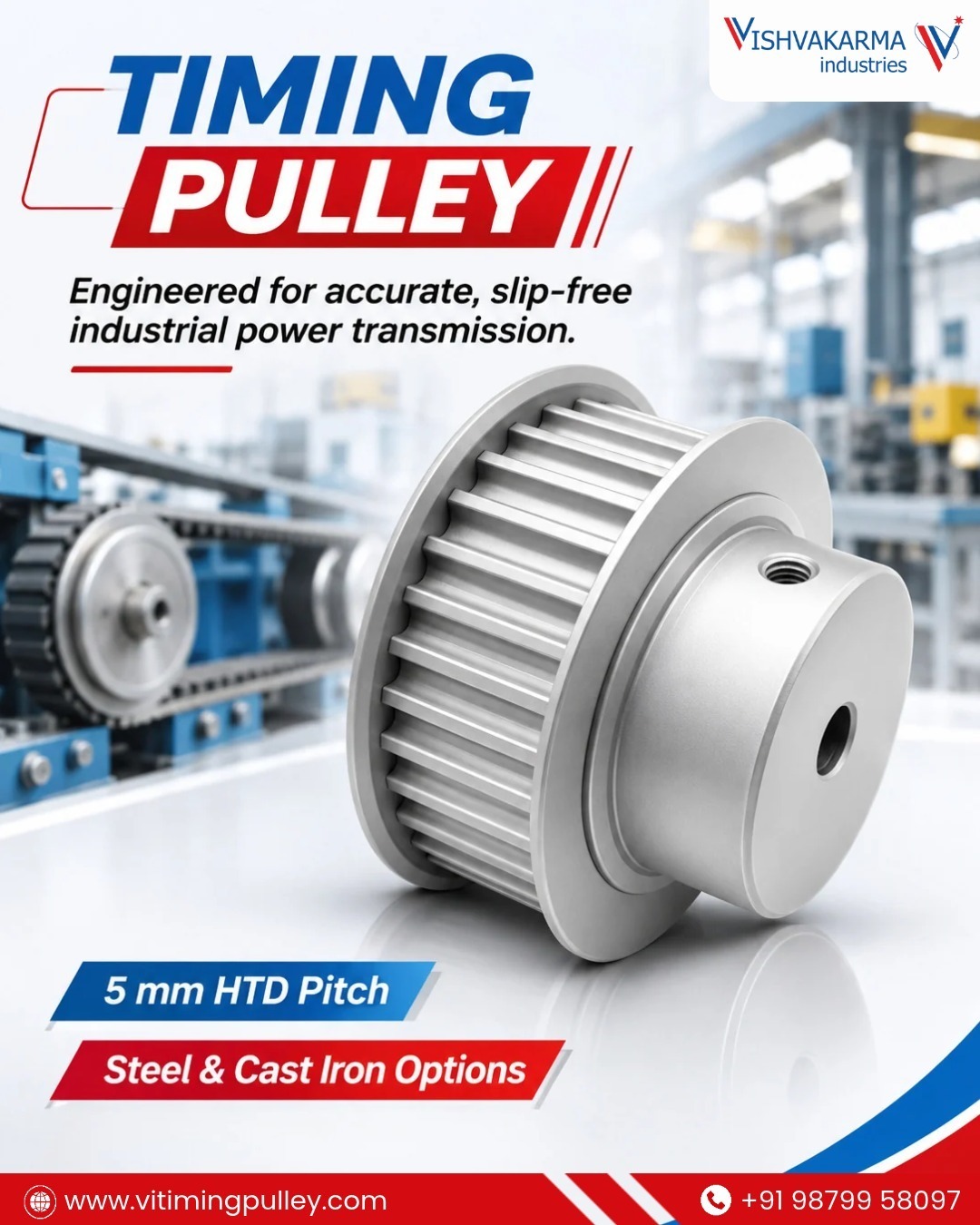
Vishvakarma Industries offers timing pulley solutions for industrial power transmission, including 5 mm HTD pitch timing pulleys in steel and cast iron.
If you are searching for a reliable Timing Pulley Manufacturer in Ahmedabad, understanding the working principle, technical specifications, features, and applications can help you select the right product for your machinery.
In this blog, we will explore how timing pulleys work, their benefits, material options, technical specifications, and industrial applications.
What Is a Timing Pulley?
A Timing Pulley is a mechanical component used in belt-driven power transmission systems. It features specially designed teeth that fit into the grooves of a compatible timing belt to transfer rotational motion between shafts.
The toothed design minimizes relative slip between the belt and pulley, ensuring accurate movement and synchronized operation.
Timing pulleys are commonly used in:
- Industrial machinery
- Automation equipment
- Conveyor systems
- Packaging machines
- CNC machines
- Textile machinery
- Printing equipment
They are available in different tooth profiles, pitches, sizes, and materials to meet various industrial requirements.
How Does a Timing Pulley Work?
A timing pulley works by engaging its teeth with the corresponding grooves of a timing belt. When the driving pulley rotates, its teeth engage with the belt and transfer rotational movement to the driven pulley.
The working process involves the following steps:
- Motor Rotation: The motor rotates the driving shaft connected to the timing pulley.
- Tooth Engagement: The pulley teeth fit into the grooves of a compatible timing belt.
- Power Transmission: Rotational movement is transferred through the belt to the driven pulley.
- Synchronized Movement: The toothed connection helps maintain consistent timing between connected shafts.
- Accurate Operation: The system supports controlled and repeatable movement in industrial machinery.
Proper belt tension, pulley alignment, and compatible tooth profiles are essential for reliable operation.
Technical Specifications of Timing Pulley
Technical specifications play an important role in selecting the right timing pulley for industrial power transmission systems.
Based on the product options highlighted by Vishvakarma Industries, the following specifications are available:
- Product Name: Timing Pulley
- Tooth Profile: HTD (High Torque Drive)
- Pitch Size: 5 mm HTD Pitch
- Material Options: Steel and Cast Iron
- Design: Toothed pulley design
- Transmission Type: Synchronous belt-driven power transmission
- Operating Principle: Positive tooth engagement with a compatible timing belt
- Application: Industrial power transmission and machinery
Additional specifications to confirm according to your requirements:
- Number of teeth
- Outer diameter
- Pitch diameter
- Bore diameter
- Keyway dimensions
- Pulley width
- Flange configuration
- Maximum operating speed
- Permissible torque and load
Confirm these dimensions and performance parameters with the manufacturer before placing an order to ensure compatibility with the intended machinery.
Key Features of Timing Pulleys
Modern timing pulleys are designed to support efficient mechanical power transmission and accurate machine movement.
1. Accurate Power Transmission
The toothed design ensures positive engagement between the timing belt and pulley, helping maintain synchronized movement during operation.
2. Slip-Resistant Operation
Unlike conventional friction-based belt systems, timing pulleys use tooth engagement to minimize slipping under suitable operating conditions.
3. 5 mm HTD Pitch
The 5 mm HTD pitch timing pulley is designed for compatible HTD timing belts with a 5 mm tooth pitch. Its tooth profile supports effective belt engagement.
4. Durable Material Options
Steel and cast iron material options provide flexibility for different industrial operating conditions and mechanical requirements.
5. Consistent Performance
A properly selected timing pulley supports stable rotational movement and helps maintain synchronization between connected machine components.
6. Wide Industrial Applications
Timing pulleys suit various industries that require controlled motion and reliable power transmission.
Types of Timing Pulleys Based on Material
Material selection plays an important role in a timing pulley's performance, durability, and suitability.
1. Steel Timing Pulley
Steel timing pulleys are used in applications where mechanical strength, durability, and stress resistance are important.
Key Benefits:
- High mechanical strength
- Durable construction
- Suitable for demanding industrial applications
- Reliable performance under appropriate operating conditions
2. Cast Iron Timing Pulley
Cast iron timing pulleys are commonly used in industrial power transmission systems where rigid construction and vibration-damping properties are beneficial.
Key Benefits:
- Strong and rigid construction
- Good vibration-damping characteristics
- Suitable for various industrial applications
- Durable performance under appropriate operating conditions
The choice between steel and cast iron depends on the machine design, operating load, speed, and environmental conditions.
What Is a 5 mm HTD Timing Pulley?
A 5 mm HTD Timing Pulley is a toothed pulley designed to work with an HTD (High Torque Drive) timing belt having a 5 mm tooth pitch.
HTD profiles feature curved tooth geometry designed to provide effective engagement between the belt and pulley.
These pulleys are used in mechanical systems where accurate motion transfer, synchronized movement, and reliable belt engagement are important.
Before selecting a 5 mm HTD timing pulley, consider the following factors:
- Belt tooth profile compatibility
- Pulley pitch and number of teeth
- Pulley diameter
- Shaft bore dimensions
- Operating speed and load requirements
- Material selection
Choosing the correct pulley and belt combination helps improve power transmission and supports consistent machine operation.
Applications of Timing Pulleys
A Timing Pulley for industrial applications is used in different types of machinery and equipment where accurate motion and synchronized power transmission are required.
Some common applications include:
- Industrial Machinery: Used in mechanical systems that require controlled rotational movement.
- Conveyor Systems: Helps transfer motion between shafts in compatible belt-driven conveyor mechanisms.
- Packaging Machines: Supports synchronized movement in automated packaging operations.
- Automation Equipment: Used in systems requiring accurate positioning and repeatable motion.
- CNC Machines: Supports controlled movement in suitable mechanical drive arrangements.
- Printing Machinery: Helps maintain synchronized movement between connected machine components.
- Textile Machinery: Used in belt-driven mechanisms for consistent machine operation.
Benefits of Using Timing Pulleys in Industrial Machinery
Choosing a suitable timing pulley offers several advantages for industrial power transmission systems.
- Accurate Synchronization: Helps maintain consistent timing between connected shafts.
- Reduced Slippage: Toothed engagement minimizes relative movement between the belt and pulley.
- Efficient Power Transmission: Supports effective mechanical power transfer.
- Consistent Machine Performance: Helps maintain repeatable movement during machine operation.
- Material Flexibility: Steel and cast iron options support different industrial requirements.
- Versatile Applications: Suitable for various automation, manufacturing, and mechanical systems.
- Reliable Operation: Proper selection and installation help support long-term equipment performance.
How to Choose the Right Timing Pulley?
Selecting the correct timing pulley is essential for achieving reliable power transmission and smooth machine operation.
Consider these important factors before purchasing:
- Belt Compatibility: Ensure the pulley tooth profile matches the timing belt.
- Pitch Size: Select the correct pitch, such as 5 mm HTD, according to system requirements.
- Number of Teeth: Choose the appropriate number of teeth based on the required pulley diameter and transmission ratio.
- Material: Select steel or cast iron according to operating conditions and load requirements.
- Shaft Bore: Check the bore size and mounting requirements for proper installation.
- Operating Speed: Consider the rotational speed and expected machine performance.
- Load Requirements: Select a pulley suited to the application's torque and power transmission needs.
- Manufacturer Quality: Choose a reliable manufacturer that can provide suitable product specifications and technical support.
Why Choose Vishvakarma Industries for Timing Pulleys?
Choosing the right timing pulley manufacturer is important for maintaining reliable industrial operations. Vishvakarma Industries provides timing pulley solutions designed for industrial power transmission applications.
The available product options highlighted include:
- 5 mm HTD pitch timing pulleys
- Steel timing pulley options
- Cast iron timing pulley options.
- Toothed pulley designs for compatible timing belt systems
Whether you require timing pulleys for automation equipment, manufacturing machinery, or other industrial applications, selecting the right material and tooth profile is essential.
If you are looking for a Timing Pulley Manufacturer in Ahmedabad, a Timing Pulley Supplier in Gujarat, or a Timing Pulley Distributor in India, connect with Vishvakarma Industries to discuss your product and application requirements.
Conclusion
A Timing Pulley is an important mechanical component used in industrial power transmission systems where accurate movement and synchronized operation are required. Its toothed design provides positive engagement with a compatible timing belt, helping minimize slippage and maintain consistent machine performance.
With options such as 5 mm HTD pitch and steel and cast iron materials, timing pulleys can support different industrial applications depending on their design and operating requirements.
Vishvakarma Industries offers timing pulley solutions for industrial power transmission needs. Contact the company to discuss your requirements and find a suitable timing pulley for your machinery.
Frequently Asked Questions (FAQs)
1. What is a Timing Pulley used for?
A timing pulley transfers rotational power between shafts through a compatible toothed timing belt. It helps maintain accurate movement and synchronized operation in industrial machinery.
2. How does a Timing Pulley prevent slipping?
A timing pulley has specially designed teeth that engage with the grooves of a compatible timing belt. This positive engagement minimizes relative slipping during operation.
3. What is a 5 mm HTD Timing Pulley?
A 5 mm HTD timing pulley is designed for use with an HTD timing belt having a 5 mm tooth pitch. Its tooth profile supports proper engagement and efficient power transmission.
Keywords